
This USD/CHF trade journal reviews a sell I recorded during the New York session on 2026-08-12. I entered at 0.81147, placed my stop at 0.81287, and planned a target at 0.8071. The journal result was loss, with an exit at 0.81287, 14 pips recorded in the result field, and an actual return of -1R. I felt confident before entering and neutral afterward.
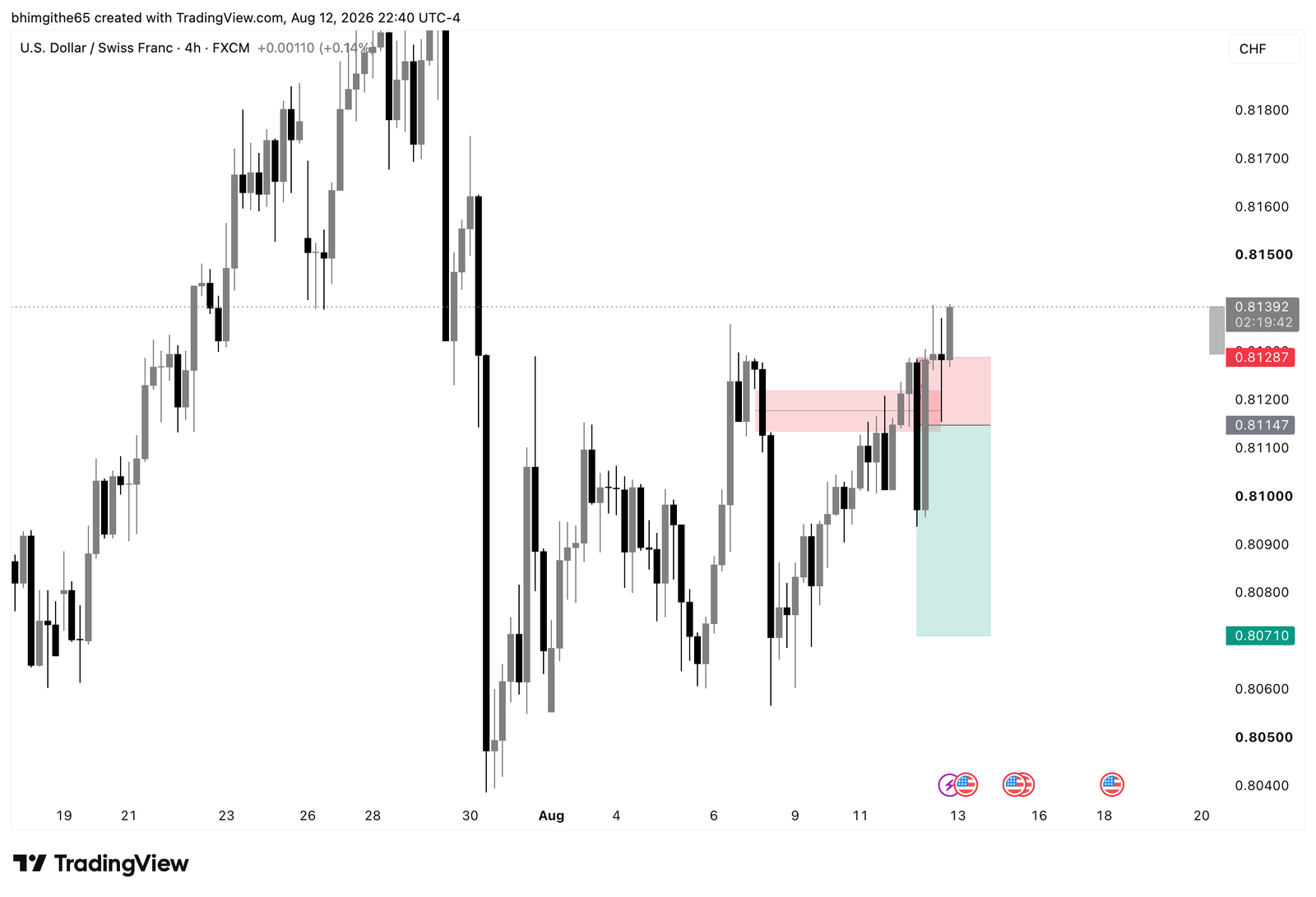
The technical labels I saved were FVG Retest, 15 Min MSS. My written reason was: “rejecting from 4 Hr bearish fair value gap and mss in 15 min timeframe ” I am keeping that explanation close to the original journal because it shows what I believed at the moment of entry. The central lesson from this review is accepting a valid loss without changing the process. The outcome matters, but the process behind the entry, stop, and target is what I can repeat or correct.
The setup I recorded
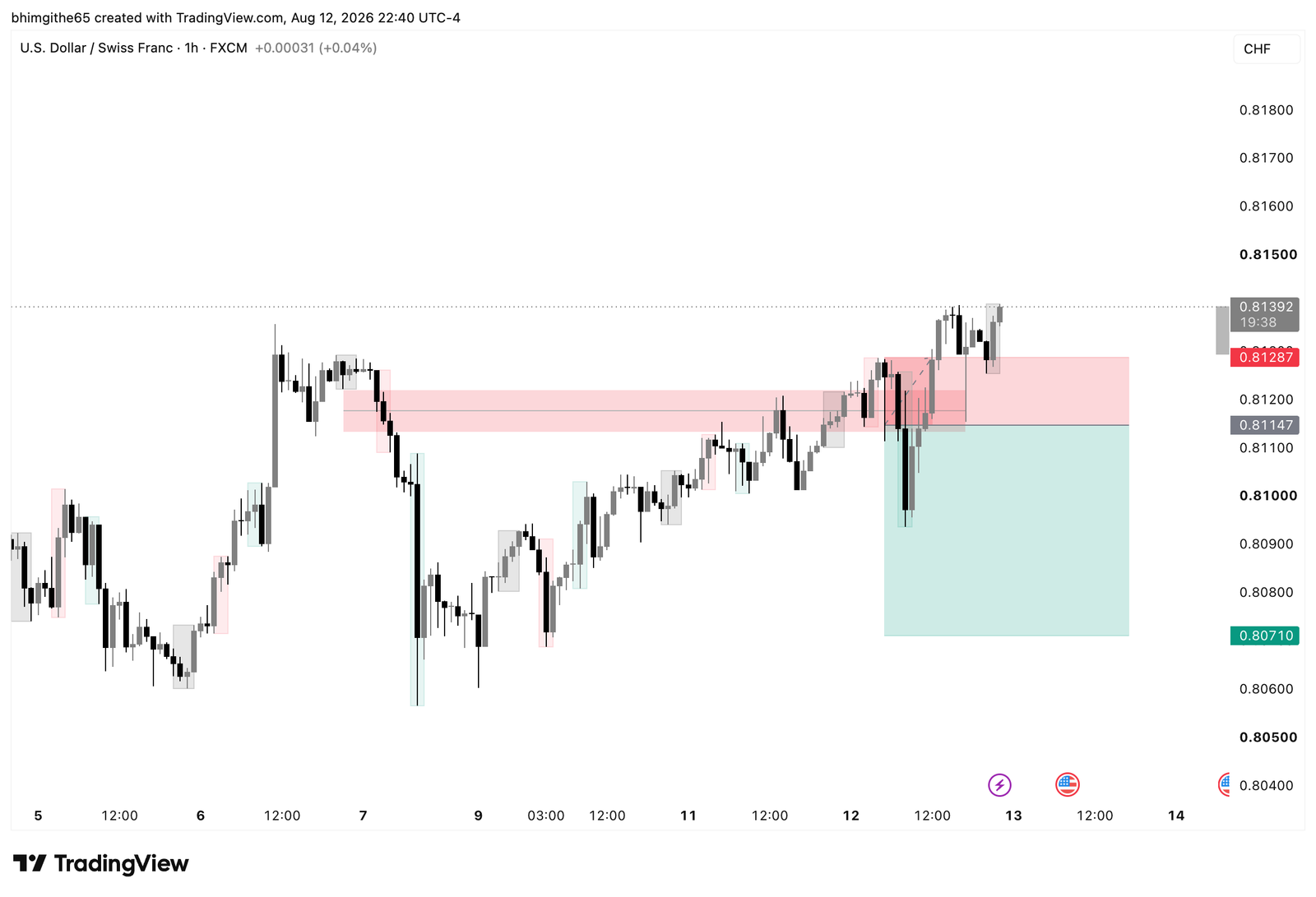
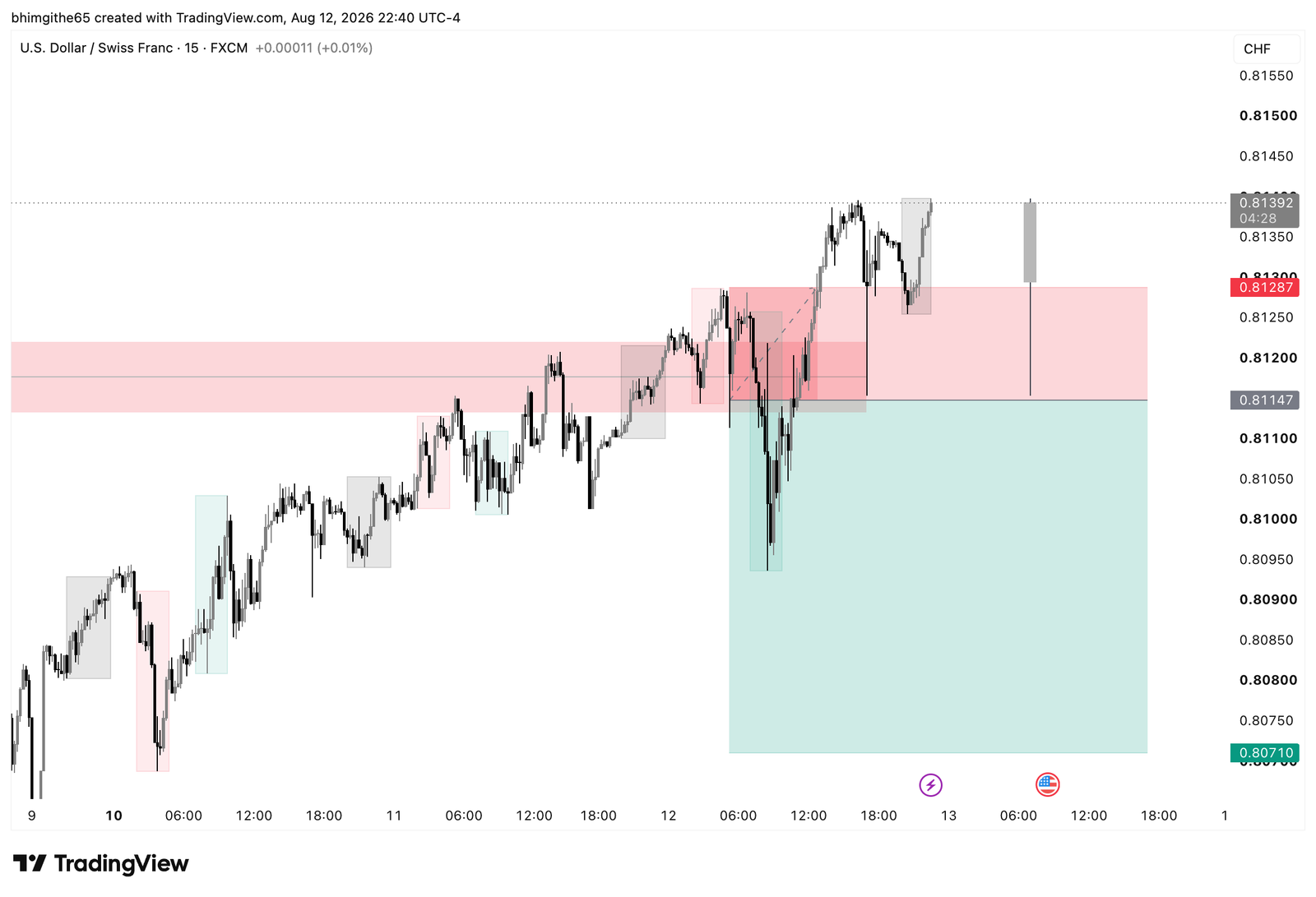
My screenshots preserve the chart evidence that existed around this trade. I have arranged them from the highest identifiable timeframe to the lowest, rather than using the order in which the files happened to be uploaded. This makes it easier to read the broader context first and then examine the execution area.
The setup tags are a short label, not proof that every condition was satisfied. The useful check is whether price actually reacted to the fair value gap, swing, liquidity level, or structure point described in my notes. Where my journal says the setup was not valid, I treat that as the main fact instead of inventing confirmation afterward.
Entry, stop and planned target
The entry at 0.81147, stop at 0.81287, and target at 0.8071 created the risk structure for this position. The stop marks where the trade would be closed, while the target records the move I planned. Only the exit at 0.81287 belongs to the realized result. A target that price reaches later does not change the result of a position that was already closed.
For this trade, the journal records -1R. I use that figure alongside the raw price levels because it makes different trades easier to compare. It also keeps me from judging the decision only by how large the target looked on the chart. The planned reward, the amount risked, and the actual exit are three separate facts.
What the result showed
My “What Price Did Later” note says: “This is my loss on A+ setup so this is not frustrating for me happy loss to bear ” This is useful hindsight, but it is not additional profit or a different completed trade. I can use it to review timing, target selection, or patience without rewriting what happened to the position.
I marked the mistake tags as Early Entry. Those tags help locate the decision that needs attention. An early or forced entry occurs before the market proves the idea; a wrong-session entry changes the environment; no pullback means I did not wait for the area I planned. When the tag is “None,” I can still review execution without manufacturing an error.
The lesson in my own notes
My written lesson was: “nothing learned here but my entry was a little bit early but if i have entered later i will also get out ” That sentence is the most direct conclusion from the journal. I want to turn it into an observable rule instead of leaving it as a general reminder. Before the next similar trade, I should be able to point to the relevant timeframe, the area being respected or rejected, the trigger, and the level that invalidates the idea.
The emotional record also matters. I was confident before the trade and neutral afterward. Confidence can still lead to an early entry, while fear or FOMO can push me to act without enough evidence. The emotion does not decide whether the trade is valid, but recording it helps me notice when I am more likely to ignore a condition.
What I will review next time
The next time I see a similar USD/CHF idea, I want to pause before entering and restate the setup in plain language. I will check whether the higher-timeframe context and the lower-timeframe reaction agree, place the stop beyond the structural invalidation described by the setup, and choose a target that belongs to the same analysis framework. If those parts are unclear, waiting is a complete decision.
This one USD/CHF trade journal does not prove what USD/CHF will do in the future, and the screenshots are a retrospective record rather than a recommendation. Its value is specific: it preserves the real levels, the recorded emotion, the actual outcome, and the lesson I wrote after the trade. That gives me something concrete to compare with the next decision instead of relying on memory.
This is a retrospective trading journal for education, not a recommendation to enter a trade. The featured cover is AI-generated editorial artwork; the TradingView charts are the original journal screenshots.