
This GBP/USD trade journal reviews a sell I took during the London session on August 4, 2026. I entered at 1.34443, placed my stop at 1.34540 and planned a target at 1.34195. Instead of moving toward that target, the trade ended at the stop for a recorded loss of 9.7 pips and about -0.5R. The numbers matter, but the real subject of this review is why I entered at all.
I marked the setup as “not valid.” Before the trade I felt confused, and afterward I felt regretful. My mistake tags were forced entry, overtrading, fear of missing out and early entry. Those details all point to the same problem: I was trying to make a trade happen when my own process had not produced a reason to take one.
The context I had on the charts
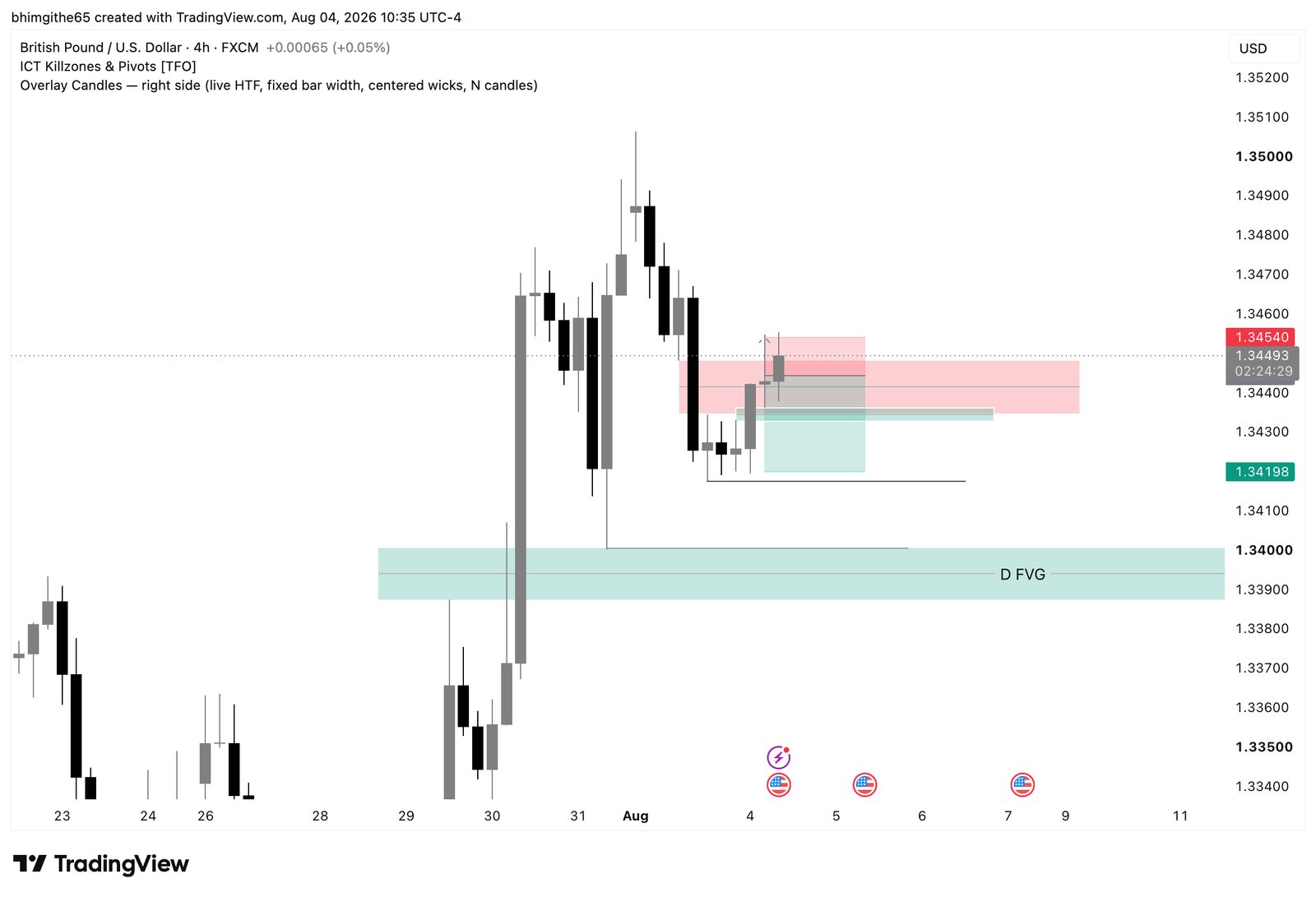
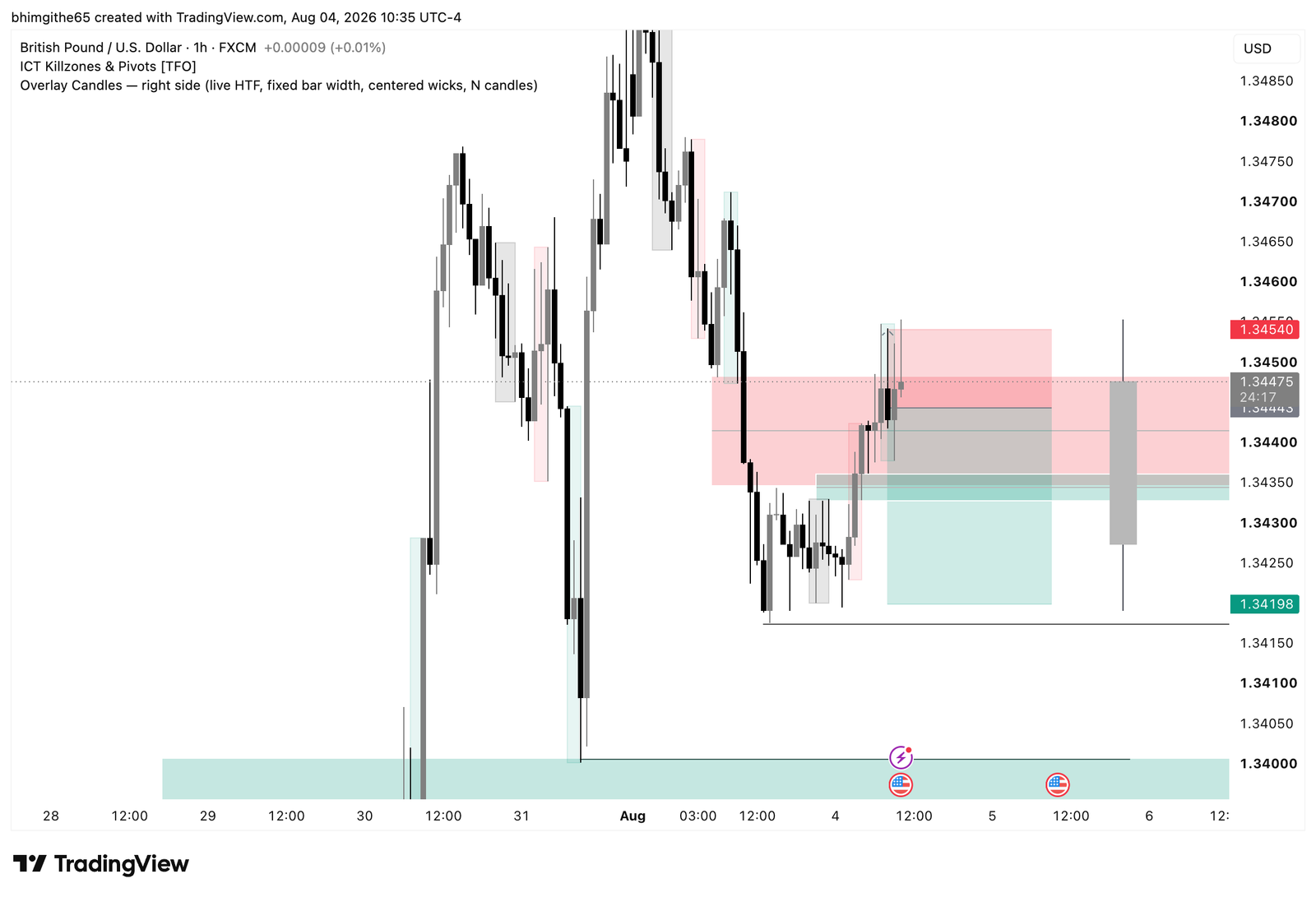
I saved three TradingView screenshots for this review: the 4-hour, 1-hour and 15-minute views. The 4-hour chart gives the broadest context, the 1-hour chart brings the planned levels closer, and the 15-minute chart shows the execution area in more detail. I have kept them in that order so I can review the decision from the higher timeframe down to the entry timeframe.
The screenshots show the sell position I marked, with the stop above the entry and the target below it. They are useful evidence of the levels I chose. They do not create a valid setup after the fact. My written entry reason was simply “not at all,” so I cannot honestly add a technical confirmation that I did not record at the time.
The 1-hour view and the missing reason
On the 1-hour screenshot, I can see the same planned trade inside a narrower part of the price movement. A chart can always look persuasive when I already want to enter. That is exactly why a written checklist matters: it forces me to name the setup before I risk money.
For this trade, I could not name a valid setup. The mistake was therefore earlier than the stop loss. It happened when I treated the urge to participate as if it were evidence. The stop did its job by limiting the loss, but good risk control does not turn an unsupported entry into a good decision.
The 15-minute execution and realized result
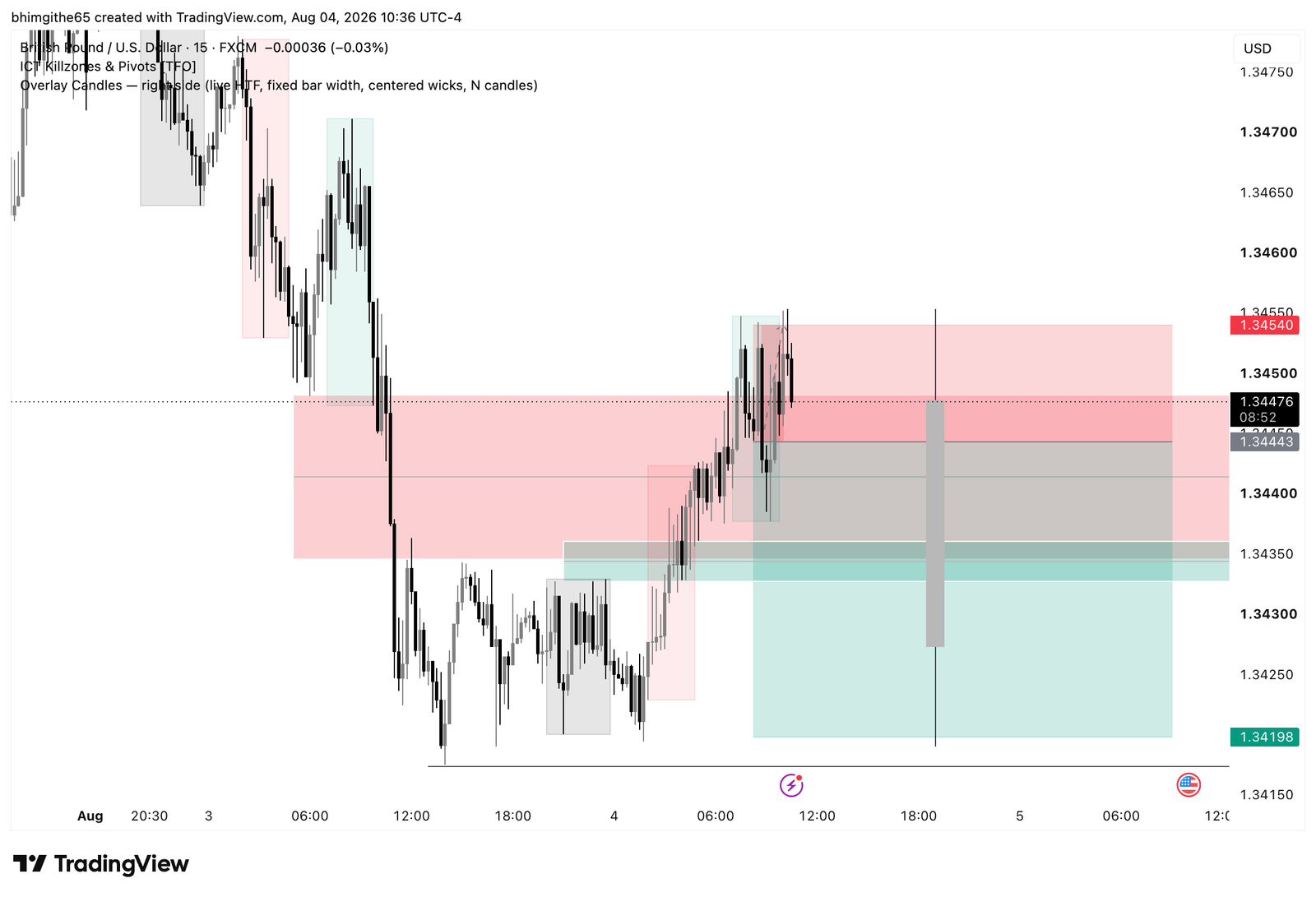
The 15-minute chart is the closest view of the execution. I entered the sell at 1.34443 and the stop was 0.00097 above the entry, equal to 9.7 pips for GBP/USD. Price later moved higher, which agrees with the stopped result recorded in my journal.
I have to separate that realized result from the original target. The target at 1.34195 represented the move I wanted, but it was never reached. The completed trade was a loss. Keeping that distinction clear prevents a planned reward from being confused with money the market actually delivered.
What the emotions tell me
I recorded confusion before entering and regret after the loss. Confusion was already useful information. When my setup is clear, I should be able to explain the market condition, the trigger and the invalidation level in plain words. If I cannot do that, waiting is a decision too.
The combination of forced entry, overtrading, FOMO and early entry also shows that this was not one isolated technical error. My attention had shifted toward recovering money. Once the goal became getting money back, I stopped judging the next trade on its own quality.
The lesson I am carrying forward
My journal note says this was a revenge trade: I took a trade without a setup because I was obsessed with money, and I lost both money and discipline. That is the clearest lesson from this GBP/USD trade journal. The next opportunity should never be responsible for repairing the emotion created by the previous result.
My practical review is simple. Before another entry, I need to identify a valid setup, state why it is valid, and accept that there may be no trade. If I feel confused or pressured to recover a loss, I should step away until I can evaluate the chart normally. This single loss does not prove what GBP/USD will do next. It does show how quickly an invalid idea can become a real loss when I ignore my own rules.
This is a retrospective trading journal for education, not a recommendation to enter a trade. The featured cover is AI-generated editorial artwork; the three TradingView charts are the original journal screenshots.