
This EURUSD trade journal covers a London session sell from July 22, 2026. My higher-timeframe view was bearish, price was falling from a four-hour fair value gap, and I also noted an Asian-session sweep with a 15-minute market structure shift. I entered at 1.14117, used 1.14182 as the stop, and planned a target at 1.13985.
Price moved lower first but reversed before reaching the target. It hit the stop for a recorded 6.5-pip loss, or minus 1R. I was confident before the trade and still marked myself satisfied afterward. I selected no mistake tags, and my lesson was that I took the best trade available from my analysis even though it stopped out.
The trade numbers and why the loss matters
The stop was 6.5 pips above the sell entry, while the target was 13.2 pips below it. That planned reward was roughly twice the risk, but the actual outcome was the full stop. Keeping both numbers in the journal helps me separate the quality of the plan from the result of this single attempt.
My setup tags were FVG Retest, Session Sweep, and 15 Min MSS. Unlike the previous early-entry loss in this series, I did not record a forced entry or missing confirmation. That difference matters. A disciplined process can still lose because every trade is exposed to uncertainty after the entry.
Four-hour chart: bearish context from the fair value gap
The four-hour screenshot gives the highest-timeframe view. It shows the marked bearish area and the larger decline that developed after the trade date. My original reason was that the market was in a higher-timeframe downtrend and falling from a four-hour fair value gap.
This context supported looking for a sell, but it could not guarantee that the timing would survive every short-term reversal. The purpose of the higher timeframe was to define direction and the area of interest. I still needed a smaller-timeframe entry and a fixed point where the idea would be invalidated.
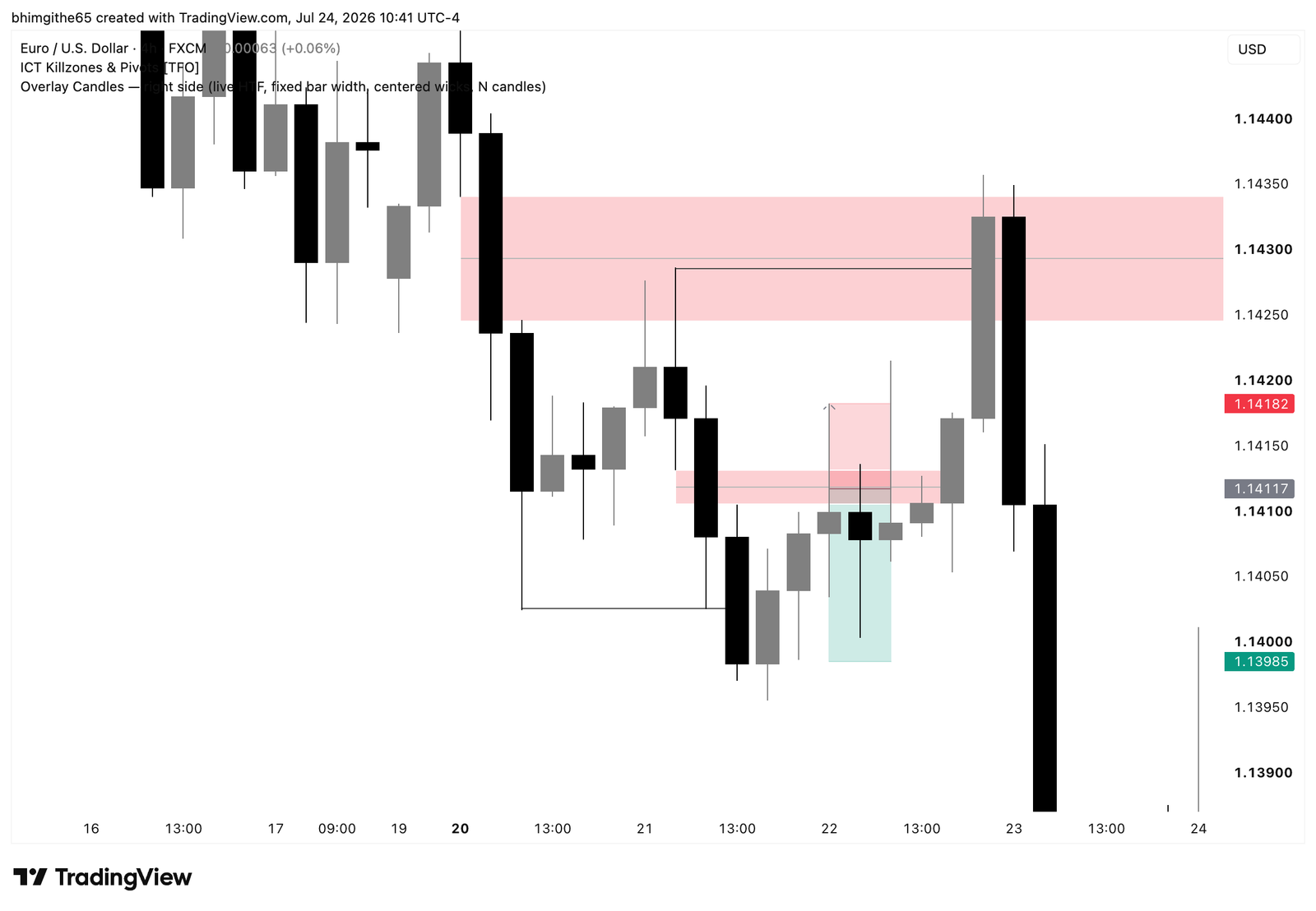
One-hour chart: the reversal that reached the stop
The one-hour screenshot shows the market moving around the entry area, lifting above the stop, and then falling sharply later. This is a clear example of why direction and timing must be reviewed separately. The later bearish move was consistent with my broader view, but my position had already closed at 1.14182.
I do not want to move the stop in hindsight or claim the later decline as part of my result. The risk level did its job by defining the maximum planned loss. Once price reached it, the trade was complete. Any move on the next day belongs to a new observation, not to the position I originally held.
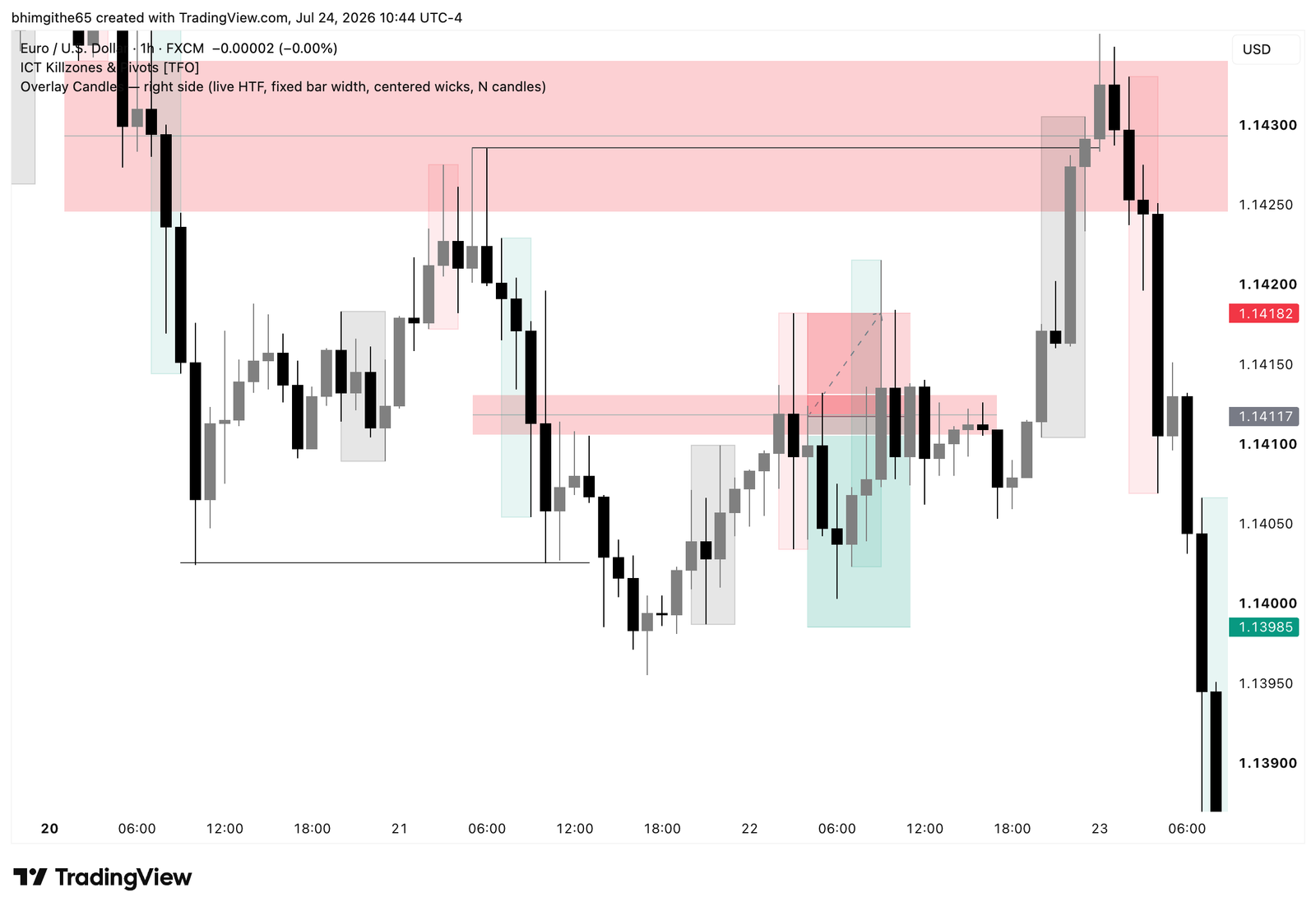
Five-minute chart: price moved toward the target first
The five-minute screenshot gives the closest view of execution. It shows price moving lower after the sell, but the decline stopped before the 1.13985 target. Price then reversed upward and reached the stop. That path matches the note I wrote about what happened after entry.
Seeing price initially move in my favor can make a stopped trade feel avoidable, but my journal does not record a management rule that required an early exit or a moved stop. I should not invent one now. The honest record is that I followed the original levels and accepted the planned 1R loss.
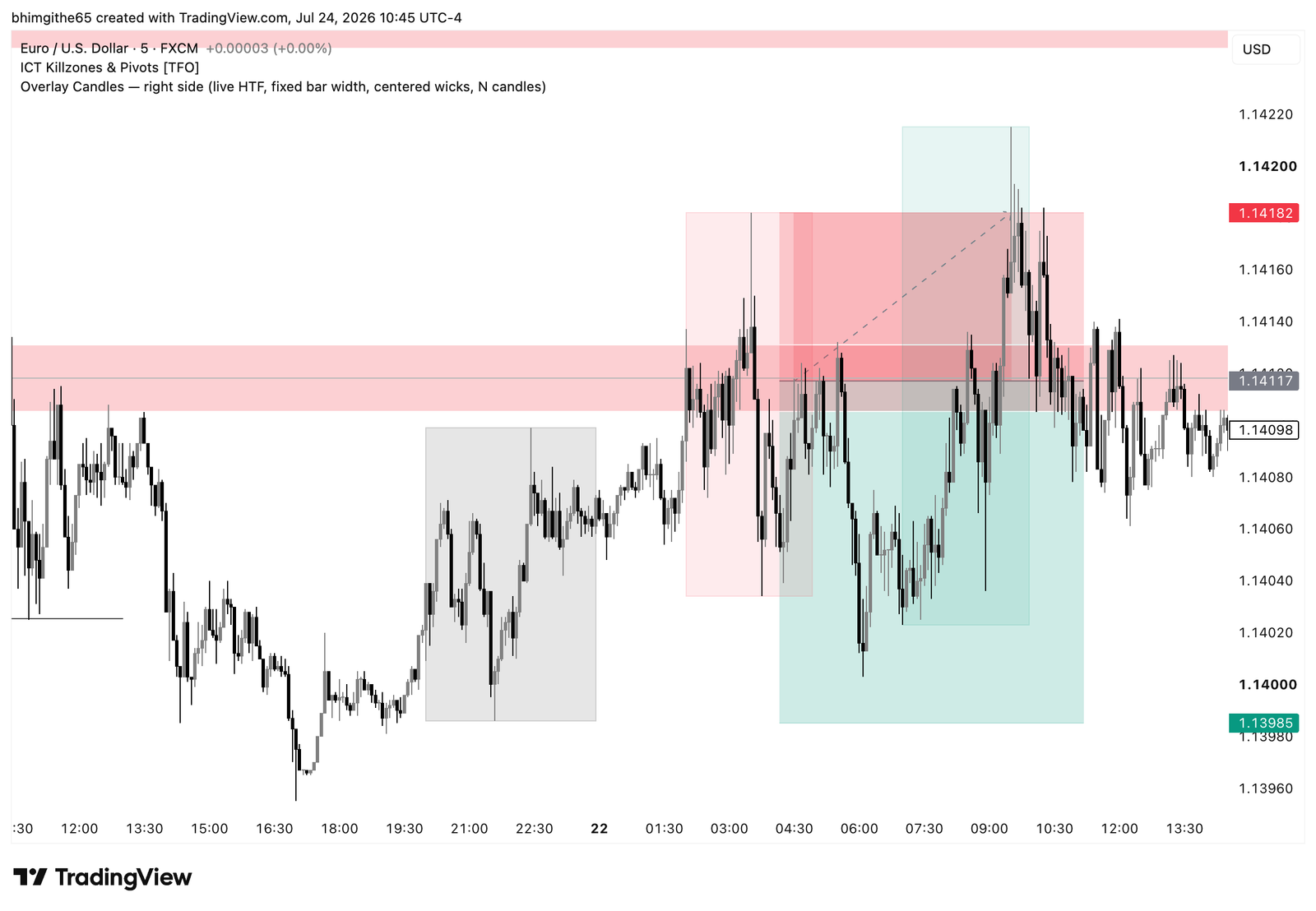
A valid setup does not promise a winning result
One reason to keep a trade journal is to avoid judging every decision only by the outcome. If a setup meets my rules, uses controlled risk, and still loses, the loss alone does not prove that the entry was a mistake. I recorded confidence before the trade, satisfaction afterward, and no mistake tags.
That does not mean the setup can never be improved. Over a larger sample, I can compare how often this combination of higher-timeframe FVG, session sweep, and 15-minute shift performs. For this single example, the evidence supports a valid planned trade that encountered a reversal before the target.
The lesson I am taking forward
My lesson was brief: I took the best trade according to my analysis, but it hit the stop loss. I want to keep that attitude connected to risk discipline. Accepting a valid loss is different from ignoring mistakes; here I reviewed the screenshots, entry, stop, target, and emotions and found no recorded rule violation.
This EURUSD trade journal reminds me that consistency means repeating the process without expecting certainty. The market later moved lower, but the realized result remained minus 1R. I can be satisfied with following the setup and still record the loss accurately. That gives future reviews cleaner information than changing the story to match what price did afterward.
Related reading: my earlier NDX100 journal about waiting for lower-timeframe confirmation.
This is a retrospective trading journal, not a recommendation to enter a trade. The featured cover is AI-generated editorial artwork; the 3 TradingView charts are the original journal screenshots.