

This EUR/USD trade journal covers my sell on July 29, 2026 during the New York session. I sold EUR/USD after price broke a low because the higher timeframe looked bearish to me. I did not wait for a pullback. The trade stopped out, and I later wrote that high-impact FOMC news was part of the context I should have respected. This entry is about the gap between having a directional idea and choosing a disciplined moment to execute it.
The recorded entry was 1.13822, the stop was 1.13918, and the target and exit were 1.13534. I recorded a 1R loss. These are the completed trade facts; the later movement discussed below is a separate hindsight observation. I am sharing the original screenshots so the reasoning can be checked against the chart, while keeping the written journal as the source for what I actually decided.
Why I considered this EUR/USD setup
The breakout itself was my immediate trigger. A break of a prior low can look decisive, especially when it agrees with a bearish view. But in my journal I specifically identified the missing pullback as a mistake. A pullback would not have guaranteed a win, yet waiting for one was part of the process I wanted to follow. The news risk made the timing even more important. My notes do not give a detailed event timeline, so I am not assigning exact minutes or claiming that a particular candle was caused solely by the announcement.
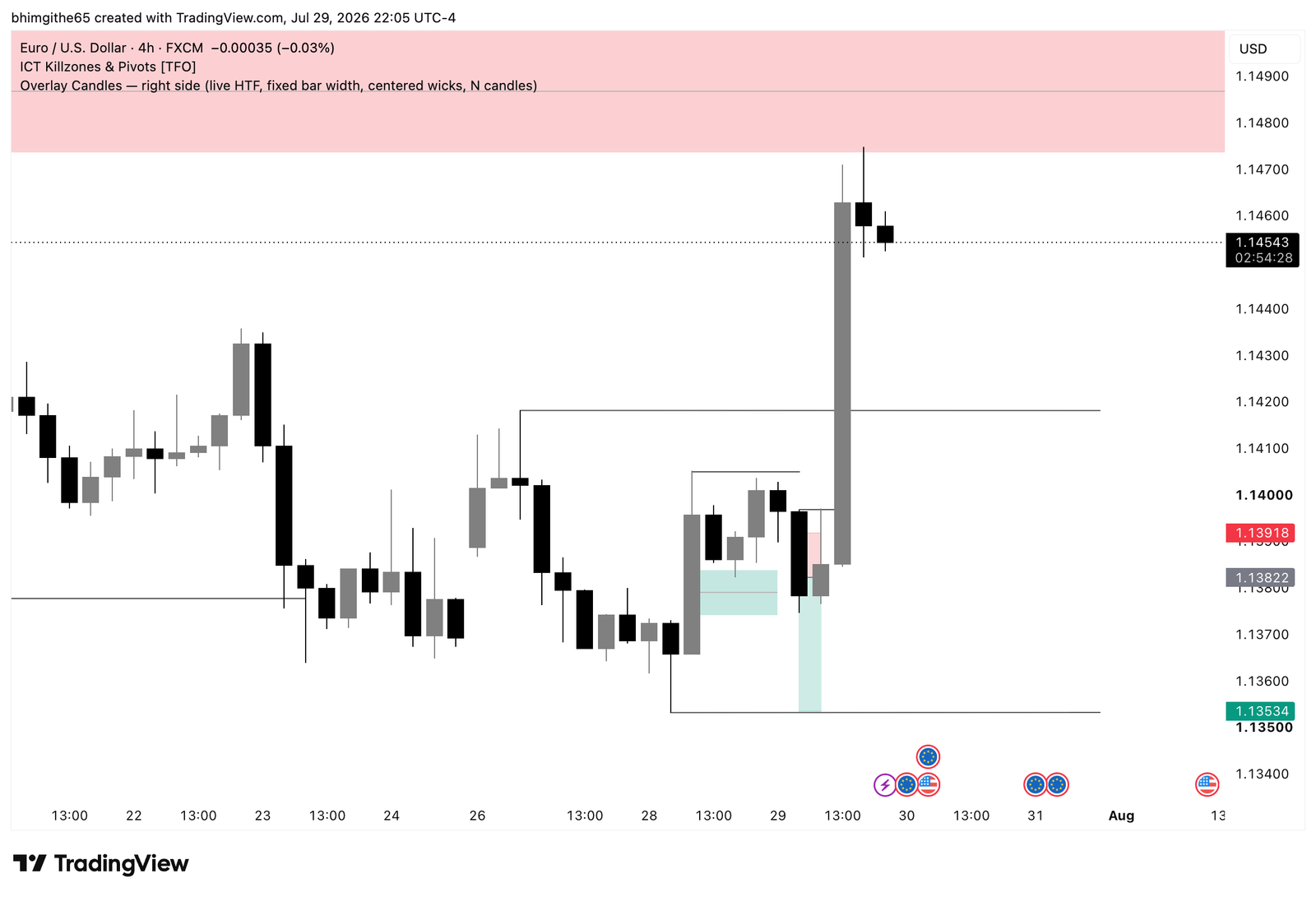
4-hour original chart: what it adds
The original four-hour TradingView screenshot is included here, unchanged. It is one of the three charts saved with this journal, not a generated market image. I use it to inspect the marked zones and the surrounding price action alongside my written notes. A screenshot saved after the event can show what happened around a level, but it cannot by itself prove exactly what I knew at entry or when I made each decision. The four-hour image preserves the higher-timeframe context I called bearish.
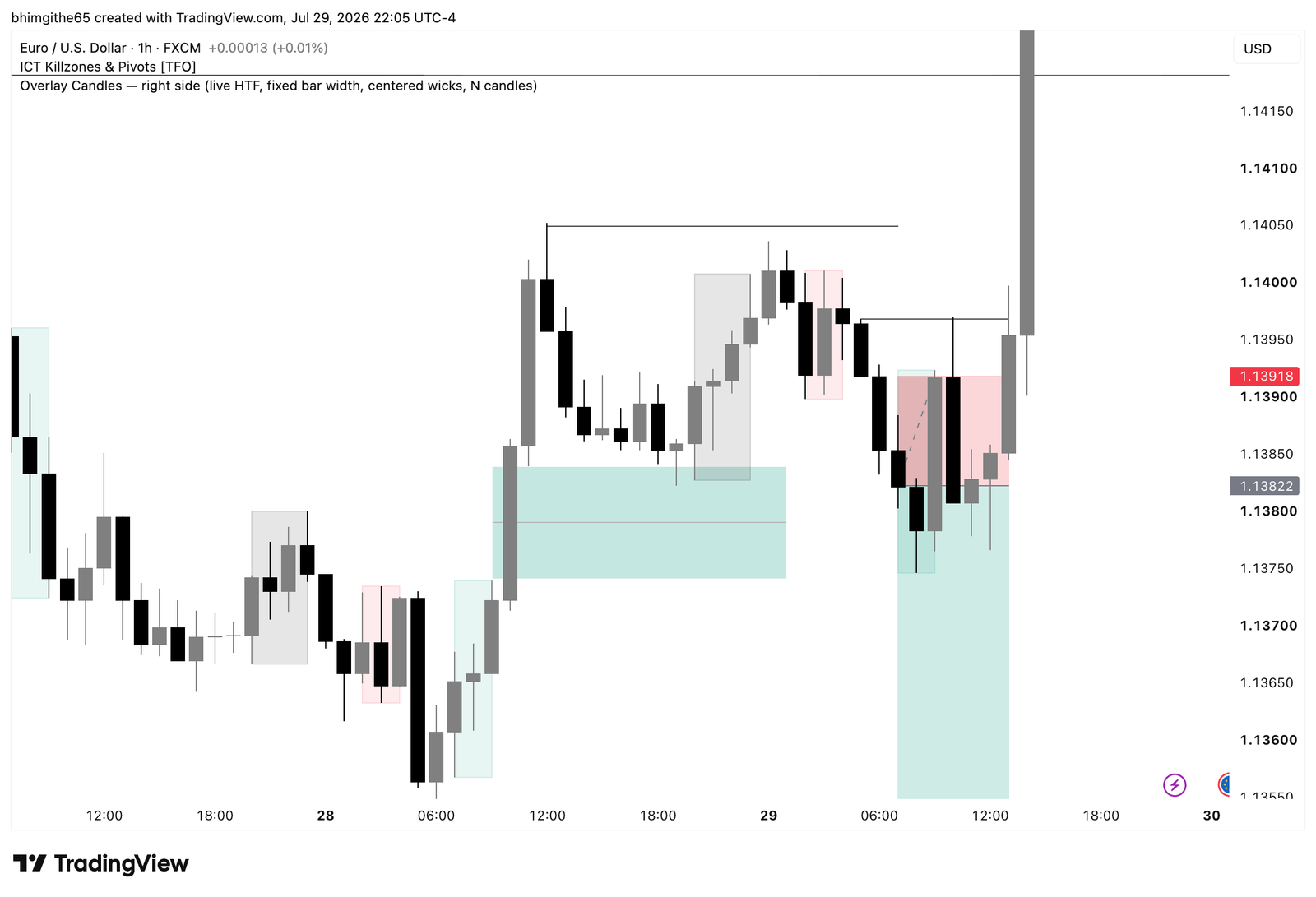
1-hour original chart: what it adds
The original one-hour TradingView screenshot is included here, unchanged. It is one of the three charts saved with this journal, not a generated market image. I use it to inspect the marked zones and the surrounding price action alongside my written notes. A screenshot saved after the event can show what happened around a level, but it cannot by itself prove exactly what I knew at entry or when I made each decision. The one-hour image shows the move around the marked breakout area.
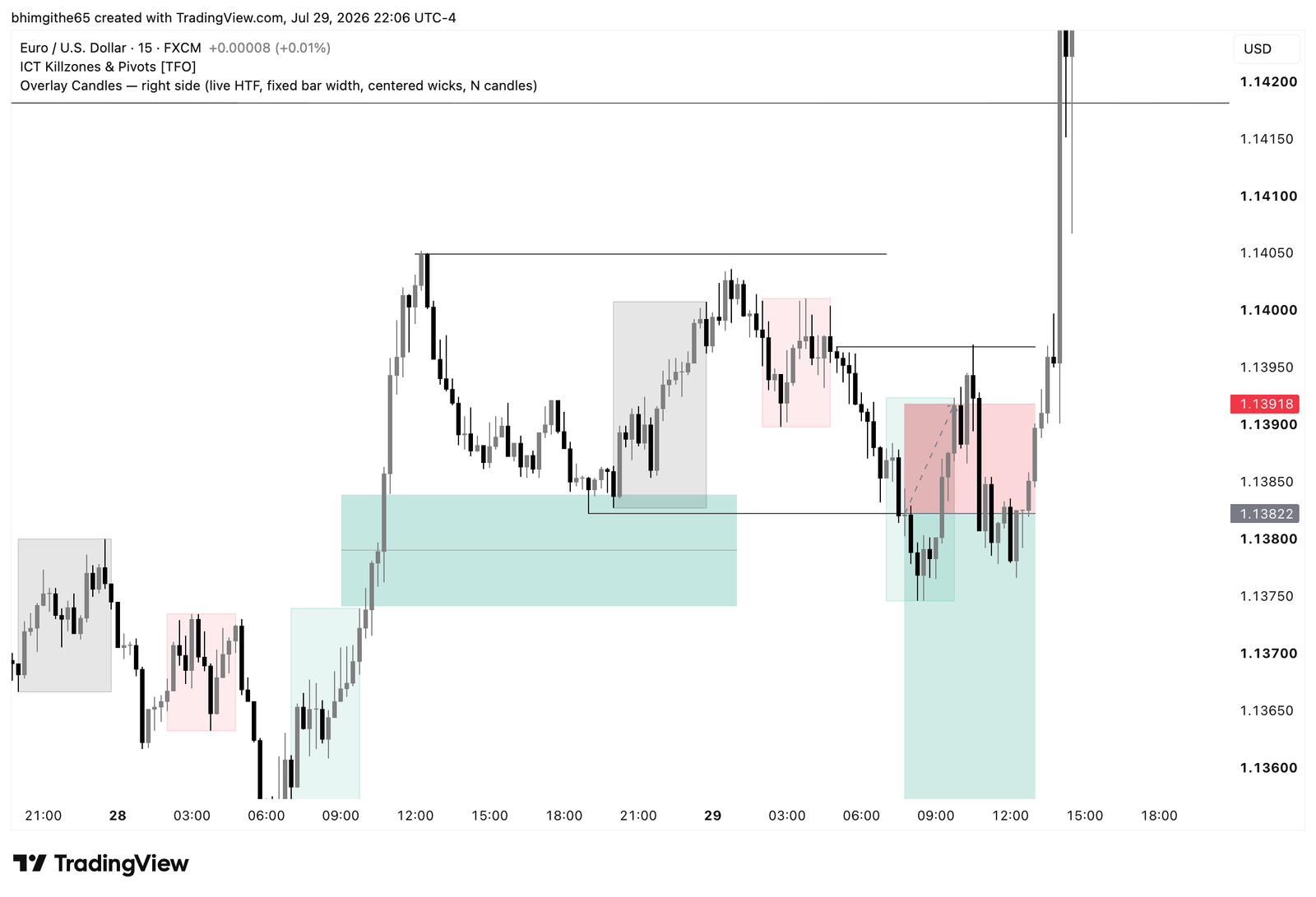
15-minute original chart: what it adds
The original 15-minute TradingView screenshot is included here, unchanged. It is one of the three charts saved with this journal, not a generated market image. I use it to inspect the marked zones and the surrounding price action alongside my written notes. A screenshot saved after the event can show what happened around a level, but it cannot by itself prove exactly what I knew at entry or when I made each decision. The 15-minute image makes the later upward move easier to examine, without proving its sole cause.
Entry, stop and the recorded result
I entered the sell at 1.13822, set the stop at 1.13918, and had a take-profit at 1.13534. The exit was 1.13918, the same as the stop. The 0.00096 difference from entry equals 9.6 pips, and the journal records a 1R loss. The target was a plan, not a realized move. I also tagged the trade as no pullback, forced entry, early entry and FOMO. I was confused before and regretful afterward; those are my own recorded labels, not emotions added for a story.
What happened afterward
My later note says price moved strongly higher, opposite the direction I expected. I associated that movement with the FOMC statement. A macro announcement can change the conditions quickly, but I am careful here: the journal documents my interpretation, not a full causal analysis of every tick. The original screenshots preserve the structure and the later move. They let me see the mismatch between the bearish assumption and the eventual price action without turning the chart into proof of an unrecorded trade.
The lesson I am keeping
The two rules I wrote are clear: enter on a pullback rather than chasing the breakout, and do not trade just before high-impact news. In a future setup I want the calendar check to happen before I focus on a technical trigger. If important news is near, I can wait until afterward and reassess rather than assuming the old chart context still holds. The value of this losing journal is that it names a repeatable decision error I can actually change.
For my next review, I want to keep the same distinction between setup, execution and result. The entry, stop and exit fields tell me what I actually did. The annotated chart shows the price path I can study later. The lesson field tells me what I wanted to change or repeat. Keeping those three records separate helps me notice a weak process even after a win and a useful decision even after a loss. This is one historical trade, not a prediction about what EUR/USD will do next.
Related reading: the free trading journal template I use to keep a consistent record.
This is a retrospective trading journal for education, not a trade recommendation. The featured cover is editorial artwork; the TradingView images are the original screenshots.