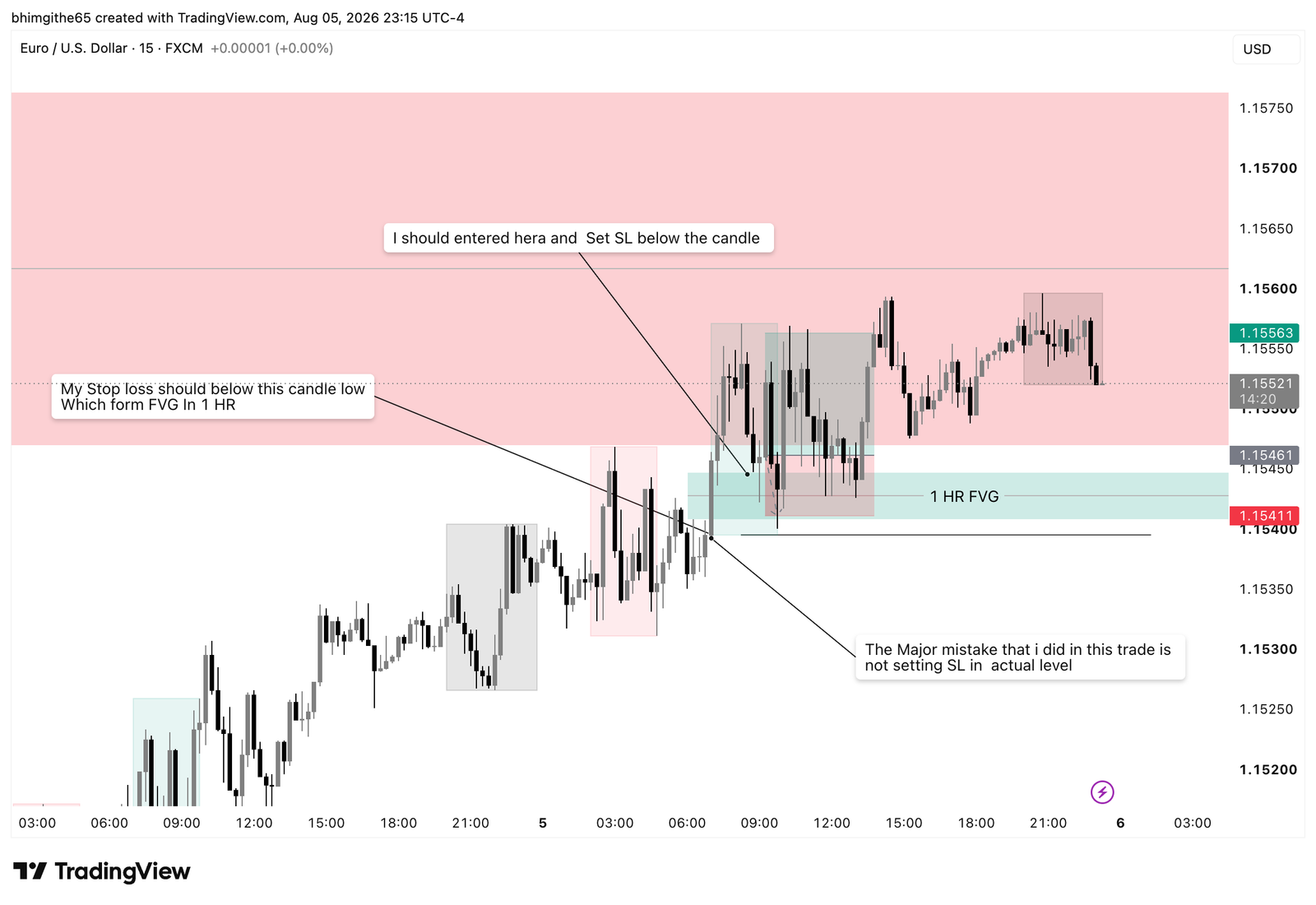
This EUR/USD trade journal reviews a buy I took during the New York session on August 5, 2026. I entered at 1.15461, placed my stop at 1.15411 and set a target at 1.15563. The position stopped out for a 5-pip loss, recorded as approximately -0.8R. I marked the setup as an FVG retest, but my review showed that the biggest issue was where I placed the stop.
Before the trade I felt confused, and afterward I felt regretful. I tagged the mistakes as forced entry and early entry. Price later moved in the direction I originally expected. My note says the target could have been reached if the stop had been below the candle that formed the 1-hour fair value gap. That later move is a useful review point, but it does not change the realized loss.
The higher-timeframe context
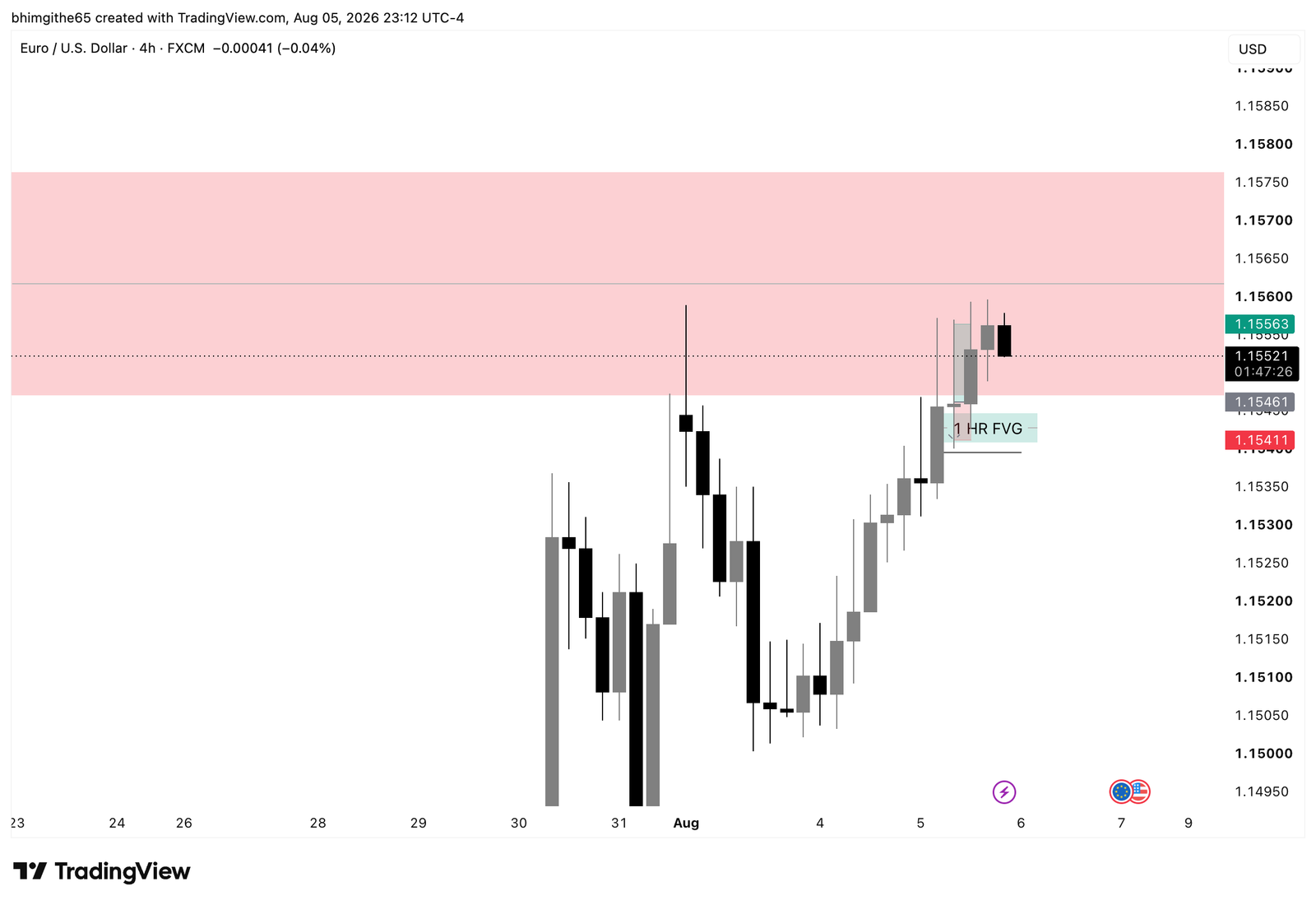
I saved 4-hour, 1-hour and 15-minute screenshots. The 4-hour chart provides the broad context for EUR/USD, while the lower timeframes show the area I used for the trade. I am keeping the screenshots in descending timeframe order so the review follows the same path I want my analysis to follow.
My written reason was that price was going higher and I thought it would continue. That describes my directional idea, but it is not a complete entry rule by itself. The trade needed a clear reaction at the fair value gap and an invalidation point that matched the structure behind the idea.
What the 1-hour FVG meant for the stop
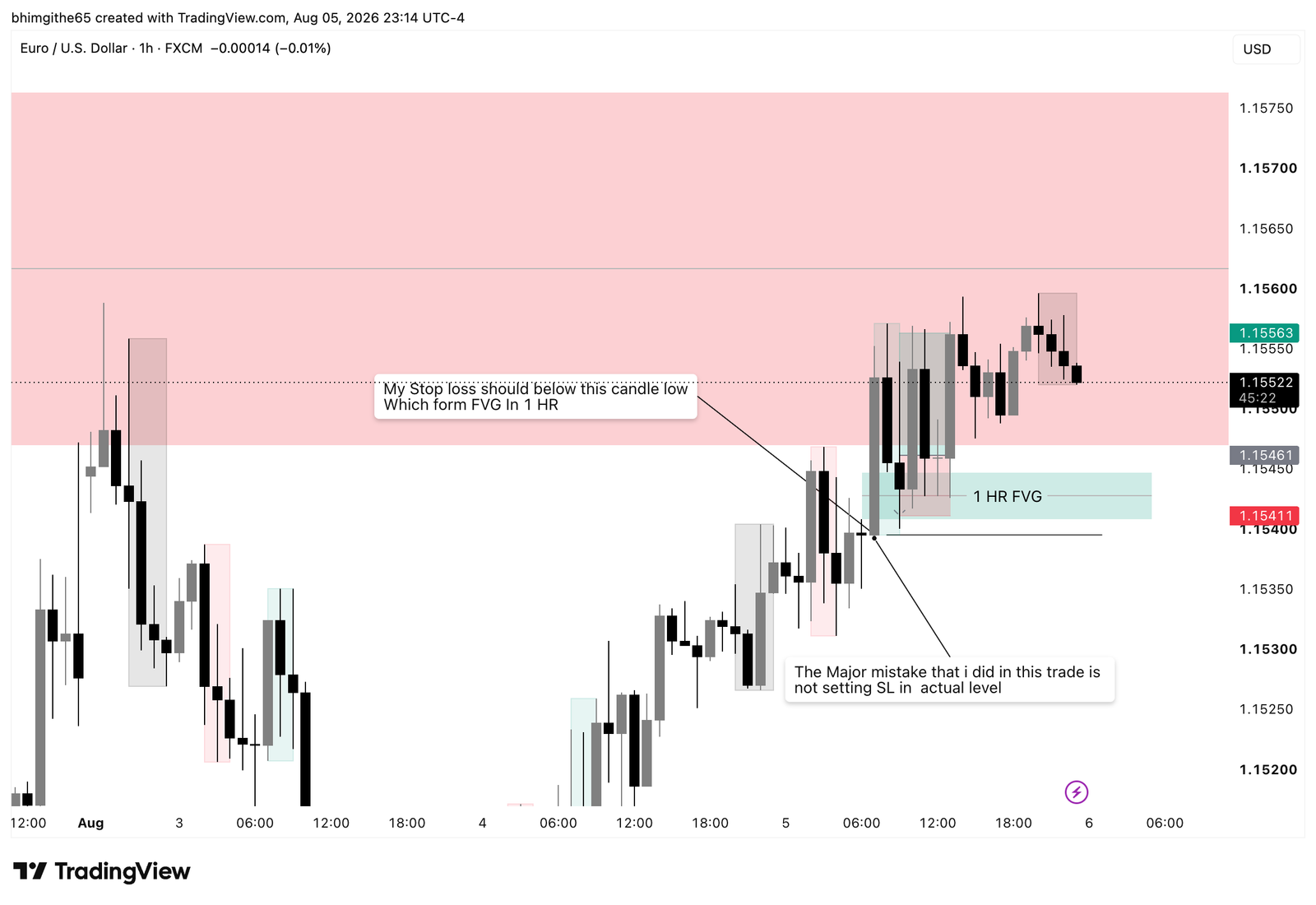
A fair value gap, often shortened to FVG, is an area traders use to describe an imbalance in a three-candle price sequence. In this journal entry, the 1-hour FVG was the area I expected price to respect. My screenshot annotation says the stop should have been below the low of the candle that formed that gap.
That observation matters because a stop loss should represent the point where the reason for the trade is no longer valid. I placed mine only 5 pips below the entry. According to my own review, that level sat inside the area where ordinary movement could still occur. I protected the position tightly, but I did not protect the logic of the setup.
The 15-minute entry and early timing
The 15-minute screenshot brings the entry and stop into closer view. I tagged early entry, which means I did not wait long enough for the reaction I wanted. A better entry is not simply a lower price after seeing the outcome. It is an entry supported by the confirmation rules I chose before the trade.
I also tagged forced entry. That is consistent with the confusion I recorded before entering. When I already believe price “should” go higher, it is easy to interpret any small movement as confirmation. The useful correction is to define the required reaction first and accept that the market may leave without me.
Realized loss versus what happened later
The recorded trade lost 5 pips. Price later moved higher, and my note says the planned target would have been hit if the stop had been below the 1-hour FVG candle. I want to use that information carefully. It helps me review stop placement, but it does not mean every wider stop is better.
A wider stop also increases the price distance at risk. To keep the same account risk, position size would need to be adjusted. The real improvement is to place the stop at a logical invalidation level first, then calculate size from that distance. Moving a stop farther away only to avoid being stopped would not solve the process problem.
The rule I want to apply next time
My main lesson is precise: when I trade an FVG idea, the stop should sit beyond the structural level that invalidates that idea, which in this case I identified as below the candle low that formed the 1-hour gap. I also need to wait for my entry confirmation instead of acting only on directional expectation.
This EUR/USD trade journal is valuable because the market later moved toward my target while my actual position still lost. Being broadly right about direction was not enough. Entry timing, invalidation and position sizing had to work together. Next time I want to decide those parts before clicking buy, not rewrite them after price reveals the outcome.
This is a retrospective trading journal for education, not a recommendation to enter a trade. The featured cover is AI-generated editorial artwork; the three TradingView charts are the original journal screenshots.