

This EUR/USD trade journal reviews a sell I took during the New York session on August 6, 2026. I entered at 1.15390, placed my stop at 1.15468 and set my target at 1.15170. Price reached the target, giving a recorded win of 22 pips and approximately 2.82R. I felt fearful before the trade and satisfied afterward.
The setup tags in my journal were 15-minute market structure shift and liquidity sweep. My reason was that price had swept a previous daily or weekly high and then shifted structure on the 15-minute chart, creating a higher-probability idea for lower prices. The result was positive, but the trade still contained a process issue: I tagged early entry as my mistake.
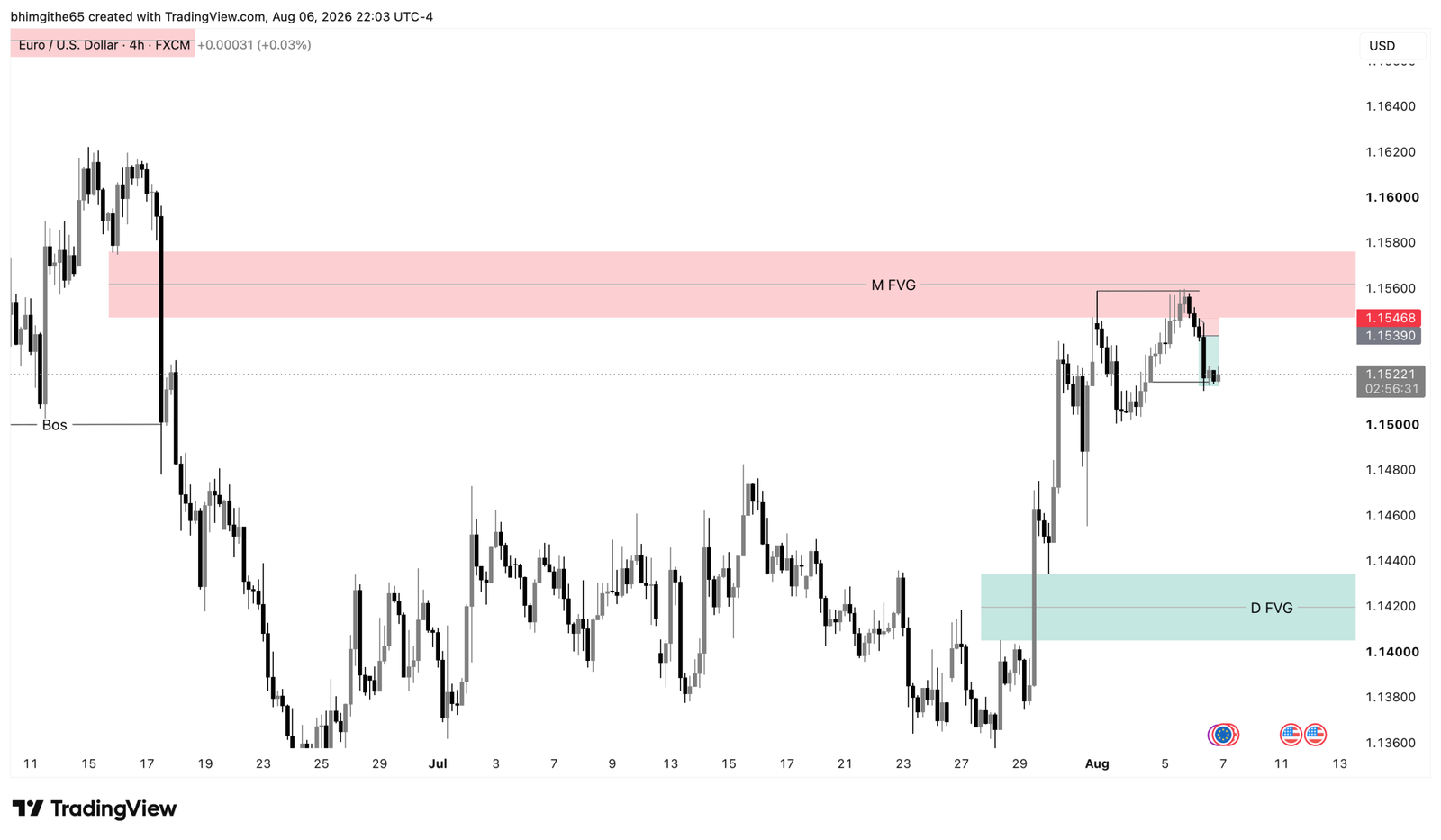
The 4-hour context
I saved 4-hour, 1-hour and 15-minute screenshots. The 4-hour chart provides the broadest EUR/USD context. It helps me see where the New York-session trade occurred without pretending that the higher timeframe supplied a separate signal I did not record.
My written setup focused on the sweep of a prior daily or weekly high and the 15-minute structure shift. A liquidity sweep describes price trading through a prior extreme before moving back. In my process, the sweep was context; the later shift was the evidence I used to consider a sell.
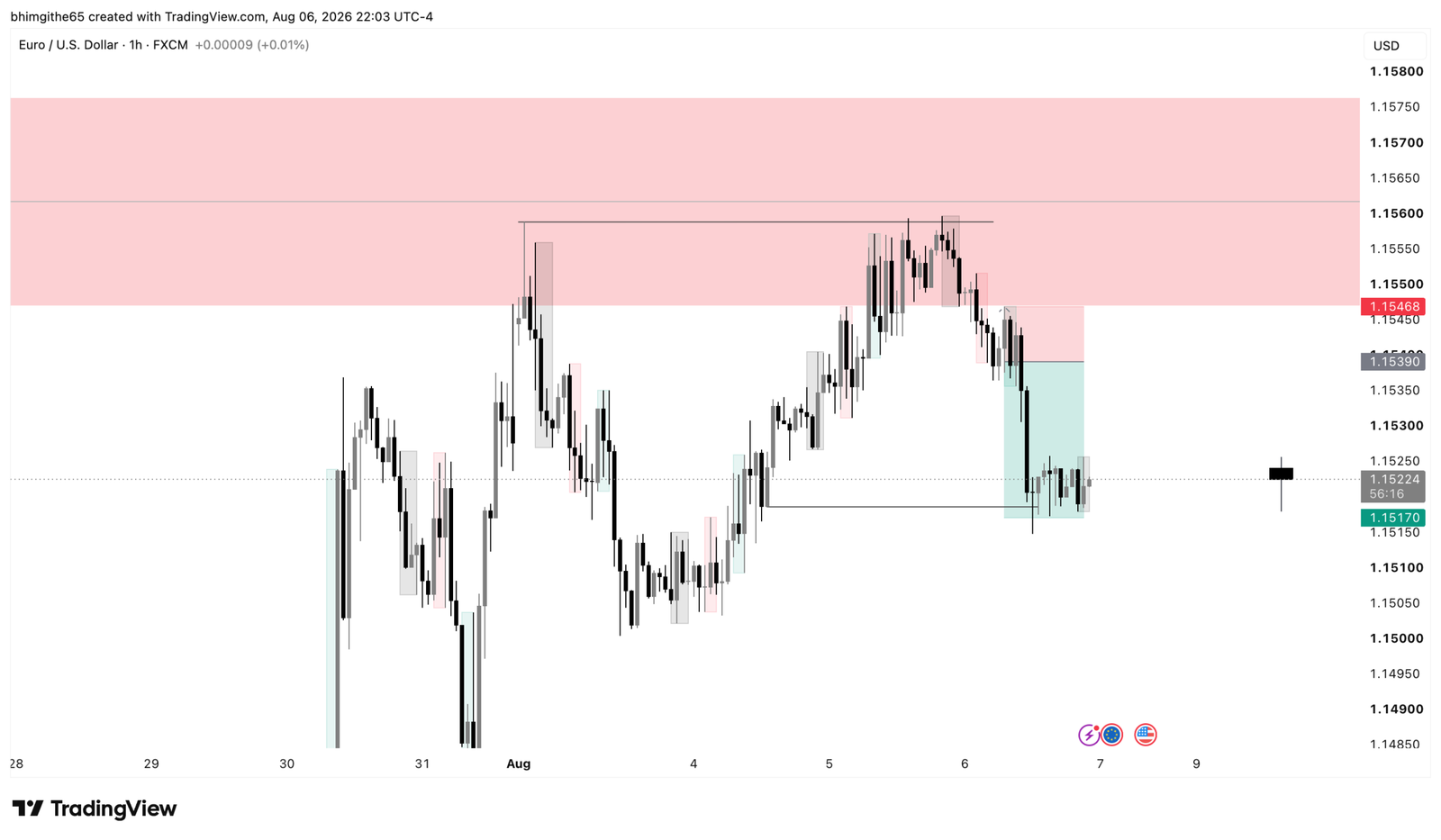
The 1-hour view of the planned risk
The 1-hour chart shows the position with the stop above the entry and the target below. From 1.15390 to 1.15468, the stop distance was 7.8 pips. From the entry to 1.15170, the target distance was 22 pips. That produces a planned and realized reward-to-risk ratio close to the 2.82R recorded in my journal.
The level calculation is useful because it keeps the review factual. It shows how much movement I risked relative to the target, but it does not prove the trade was certain. Even a setup that reaches its target begins with uncertainty, and the stop marked the level where this particular position would have been wrong.
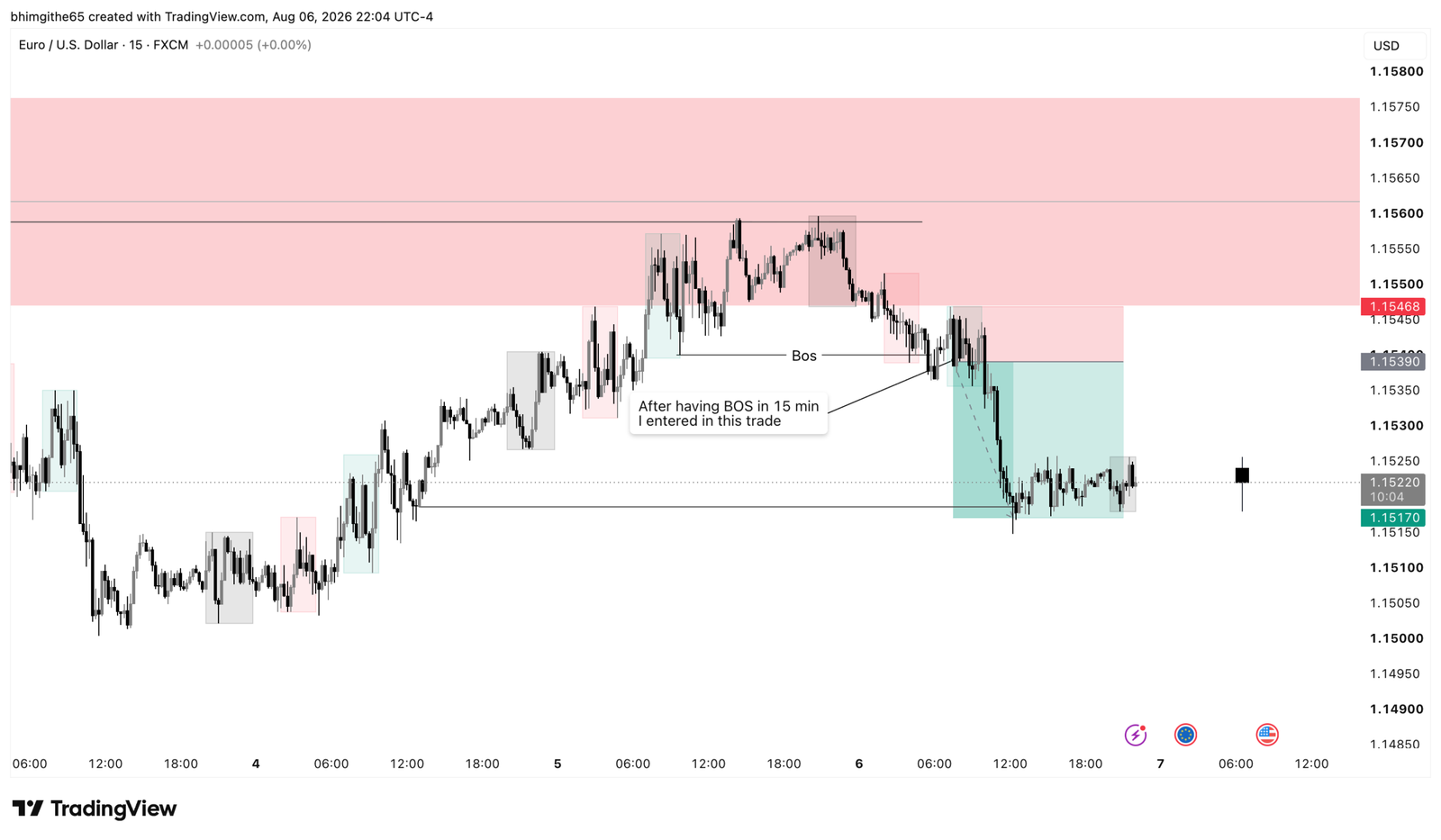
The 15-minute market structure shift
The 15-minute screenshot is the key execution view. My original annotation marks a break of structure and the entry area. This aligns with the setup I recorded: after the liquidity sweep, I saw a 15-minute market structure shift and looked for price to continue lower.
I also marked early entry. That means the direction and final result should not hide the timing issue. Entering before the complete confirmation can increase the chance of being caught in normal movement around the setup area. A winner can still reveal a habit that needs correction.
The realized result and what happened later
Price reached 1.15170, so the completed trade produced the 22-pip result recorded in my journal. In the later-price note, I wrote that price hit the take-profit level and then started consolidating. I did not record an additional exit, re-entry or extended target.
That separation is important. The trade ended at the planned target. The consolidation afterward is market context I can review, but it does not increase the realized result. Recording the finish accurately helps me compare future trades without turning hindsight into performance.
What I want to repeat and what I want to change
The part I want to repeat is trading in line with the 15-minute trend after a defined event: the prior high was swept, structure shifted, and I had clear entry, stop and target levels. The part I want to improve is patience at the entry. My fear before the trade may have contributed to acting early even though the position ultimately worked.
My written lesson is to trade only in the direction of the 15-minute trend, not against it. For the next similar setup, I want to confirm the trend and structure shift, then wait for the entry condition rather than rushing because the first move has already started. This EUR/USD trade journal records a good outcome, but its greater value is showing that a profitable trade can still be reviewed honestly for execution quality.
This is a retrospective trading journal for education, not a recommendation to enter a trade. The featured cover is AI-generated editorial artwork; the three TradingView charts are the original journal screenshots.